

Introduction to n8n, Make, and AI Automations
n8n and Make are pivotal tools for automating workflows, enabling businesses to streamline their operations through seamless integration of various applications and services. n8n, an open-source workflow automation tool, allows users to create complex workflows with a user-friendly interface by integrating APIs and services without extensive coding knowledge. It empowers users to automate repetitive tasks and facilitates data movement across platforms, assisting in enhancing productivity.

Make, previously known as Integromat, offers similar capabilities, providing a visual programming interface that connects apps and automates tasks. Both n8n and Make support a wide range of applications, making them versatile for businesses looking to enhance their operational efficiency.
As we approach 2025, the landscape of business automation is set to evolve significantly with the integration of artificial intelligence. AI-powered automations can transform businesses by enabling more advanced decision-making processes. For instance, AI systems can analyze vast datasets to optimize workflows and predict outcomes, simplifying tasks that typically require human judgment. The Trip.com Group has exemplified this trend by launching an AI-driven trip planner, which generates customizable itineraries from minimal user inputs, showing the potential of AI to simplify complex planning tasks.
The Rise of No-Code Solutions
The rise of no-code solutions like n8n and Make has transformed how businesses approach automation and workflow efficiency. These platforms democratize technology by enabling non-technical users to build applications and automate processes through visual interfaces and simple drag-and-drop functionalities. This shift allows individuals who may lack traditional coding skills to create tailored workflows that meet their specific needs, thus enhancing productivity and streamlining operations.
No-code solutions significantly reduce the time and technical barriers traditionally associated with software development. For instance, users can quickly set up automations for tasks like data collection, email processing, and integrating various software without relying heavily on IT departments. This empowerment fosters greater agility within teams, enabling faster responses to business changes and improved operational workflows.
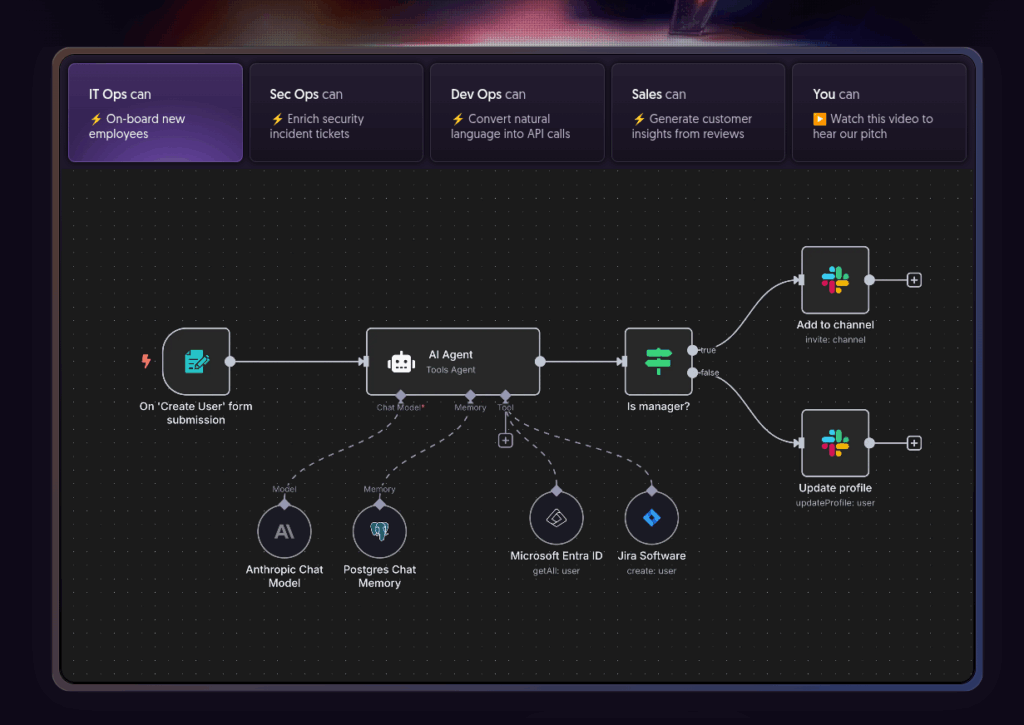
Moreover, the accessibility of no-code tools promotes a culture of innovation, encouraging creative problem-solving as users experiment with automation. By leveraging tools like n8n and Make, organizations not only enhance efficiency but also free up valuable resources, allowing technical teams to focus on more complex tasks. This strategic allocation further accelerates digital transformation efforts across industries, marking a significant evolution in business process management.
Integrating AI with Automation for Dynamic Workflows
Integrating AI with automation platforms is revolutionizing the way dynamic workflows are created and managed, enhancing decision-making processes and delivering personalized experiences. For instance, Trip.com Group has launched an AI-driven trip planner that generates customizable itineraries based on minimal user input—just three questions or an image—while integrating real-time data for seamless travel planning. This innovation not only simplifies the travel experience but also allows for tailored solutions catering to individual preferences, showcasing the power of AI-enhanced automation in improving user engagement.
In the realm of business automation, platforms are increasingly employing AI to analyze customer behaviors and preferences, allowing for real-time adjustments to workflows. For example, AI can streamline processes by predicting customer needs, thus enabling automated systems to adapt accordingly, reducing the need for manual oversight and increasing efficiency. Companies that adopt this approach become more agile, capable of responding to changes in demand or customer preferences almost instantaneously.
Looking ahead, the future of AI in automation promises even more advancements. As AI technologies evolve, we can expect more sophisticated data analysis capabilities that will further enhance personalization and decision-making. This integration could transform various industries, from healthcare to finance, enabling organizations to derive insights that automate not just routine tasks but also complex decision-making processes.
Strategies for Implementing n8n and Make Across Teams
Implementing n8n and Make within business teams requires careful planning to ensure both team buy-in and effective utilization of these automation tools. Here are practical strategies to facilitate a successful rollout:
- Communicate the Value Proposition: Initiate dialogue around the benefits of using n8n and Make, such as improved efficiency and decreased manual workloads. Present real-world examples of successful implementations—companies that have adopted these tools report significant time savings and enhanced operational capabilities.
- Build Executive Support: Gaining buy-in from leadership is crucial. Leaders can advocate for the tools’ strategic value, driving momentum and resource allocation. Highlight how automation aligns with broader business goals, driving innovation and competitive advantages.
- Tailored Training Programs: Develop comprehensive training plans tailored to the diverse roles within your team. Offer hands-on workshops and virtual training sessions that emphasize practical, role-specific applications of n8n and Make, allowing employees to immediately see the benefits.
- Encourage Feedback and Iterate: After implementation, establish channels for continuous feedback. Monitor how teams interact with the tools and solicit suggestions for improvements. This iterative approach fosters a culture of collaboration and ensures the tools are adapted to meet evolving business needs.
- Highlight Quick Wins: Showcase early successes to motivate teams and demonstrate tangible results. This can be achieved through newsletters, team meetings, or internal discussions emphasizing specific use cases where n8n and Make have improved workflows.
- Facilitate Cross-Functional Collaboration: Encourage teams across different departments to share their experiences and strategies for using these tools. Cross-pollination of ideas can lead to innovative uses and greater synergies within the organization.
- Support Customization Efforts: Acknowledge that every team may have unique needs. Invest time in customizing n8n and Make workflows to fit the specific context of different departments, ensuring more relevant applications and higher user satisfaction.
By focusing on these strategies, businesses can ensure a smoother implementation of n8n and Make, maximizing their potential and fostering a culture of automation and efficiency.
Future Trends: What to Expect in 2025 and Beyond
As we look towards 2025, the landscape for n8n, Make, and AI automation will shape up to be remarkably transformative. Businesses will increasingly rely on automation tools to enhance operational efficiency and innovate workflows. A study indicates that AI automation could lead to a significant reduction in manual tasks, allowing teams to direct their focus towards strategic, high-value activities.
One notable trend will be the integration of AI-driven decision-making processes, enabling organizations to react swiftly to market dynamics. For instance, companies like Trip.com are already developing AI systems that curate personalized experiences based on minimal user inputs. This paradigm shift will evolve the nature of customer interactions, allowing businesses to offer more tailored services without extensive manual processes.
Additionally, the challenges of adopting these advanced technologies will include managing data privacy and ensuring the upskilling of employees. Organizations must balance automation with human oversight to maintain trust and transparency in AI applications.
In summary, as we progress beyond 2025, businesses leveraging n8n and Make will experience enhanced productivity and innovative capabilities, reshaping industries while navigating the complexities associated with automation adoption. For businesses looking to stay ahead, investing in automation and AI technologies will be fundamental.